

Lexington Gardens Grow Through Kentucky State University Research and Community Partnership
Students and agricultural researchers apply soil science and food-production knowledge at two neighborhood growing sites
LEXINGTON, Ky. — Vegetables, herbs, and new growing containers are filling garden spaces in Lexington as students and agricultural researchers put Kentucky State University expertise to work beyond the classroom.
The work is underway at gardens in Winburn, a northeast Lexington neighborhood near Newtown Pike and Russell Cave Road, and at Whitney Young Park on St. Martins Avenue. At both locations, participants are planting, watering, labeling crops, collecting soil samples, and teaching young people how food moves from the soil to the table.
Kentucky State is working with the Applied STEM and Community Lab and the Community Action Council as part of the initiative.
For Emmanuelle Tudzi, a Kentucky State master’s student studying environmental science, the gardens provide a setting to apply her academic training while introducing younger participants to soil science and food production.
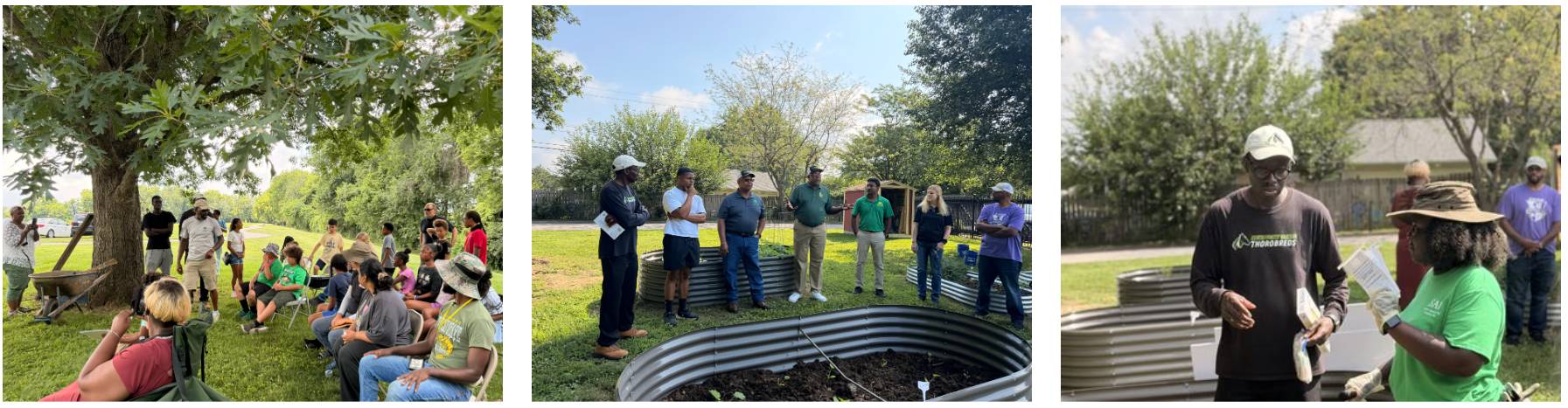
During her visits, Tudzi collects soil samples and explains how soil conditions influence plant growth. When young people refer to it simply as dirt, she encourages them to look more closely.
“It is life,” Tudzi tells them. “It is giving life to all these things that we consume as food.”
Originally from Ghana, Tudzi developed an interest in cultivation and soil years before coming to Kentucky State. She said agriculture connects people regardless of where they live.
“Agriculture is not just the thing about where you are from,” she said. “It’s a general, and it’s a global thing.”
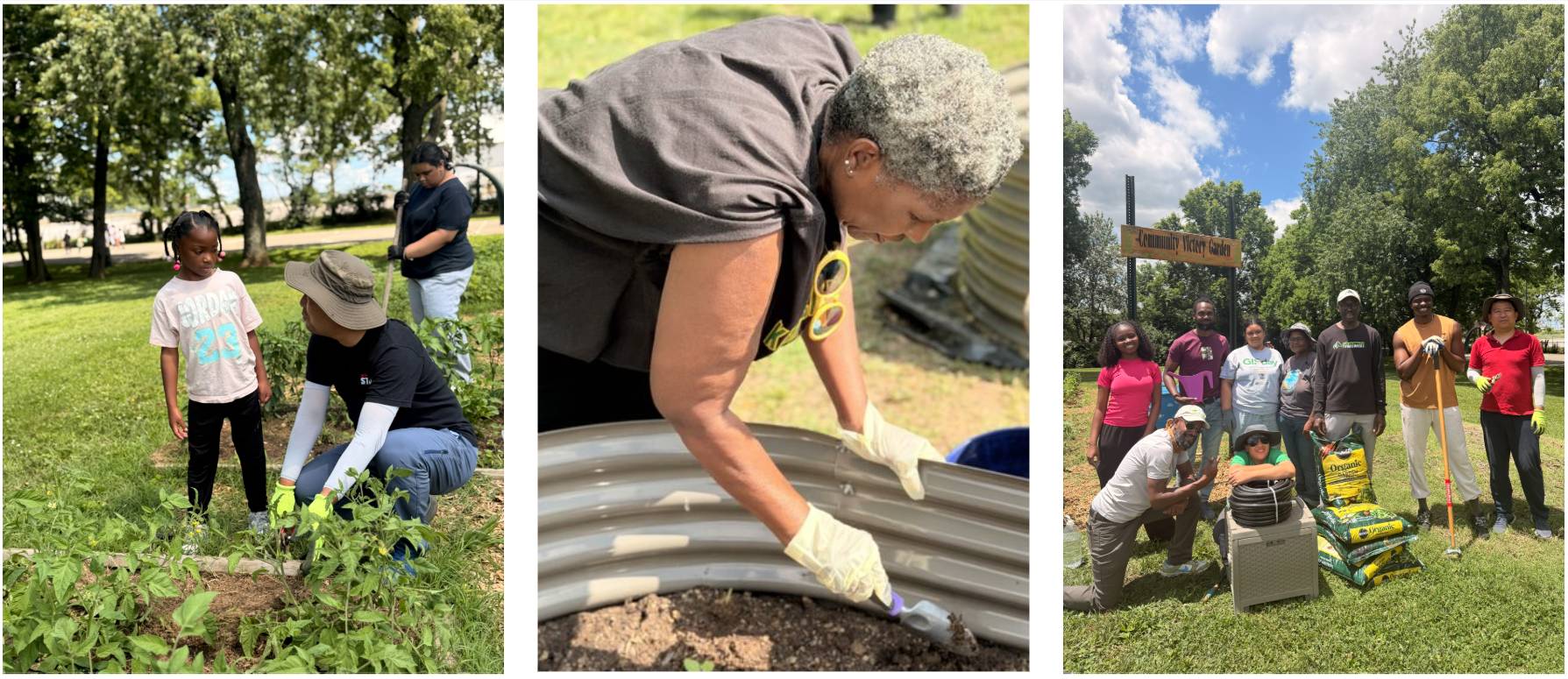
That broad perspective is reflected in the project’s practical approach. Participants learn how to evaluate soil, care for plants, and use available space to produce fresh food. The gardens also allow Kentucky State students to explain scientific concepts in ways that connect directly with everyday experience.
Dr. Sait Sarr, senior research scientist and adjunct faculty member in the College of Agriculture, Health, and Natural Resources, said urban agriculture can expand access to locally grown food while helping participants develop practical skills and identify economic opportunities.
“This not only addresses food insecurity,” Dr. Sarr said, “but it can also generate income.”
The work in Lexington represents part of a broader Kentucky initiative. According to Dr. Sarr, project partners are working with eight K-12 schools, 10 community gardens, and five nonprofit organizations, among other participants, across multiple counties.
Gardening knowledge can be used in community plots, residential yards, containers, and other compact spaces. It can also introduce participants to agricultural careers and small-scale food-production opportunities.
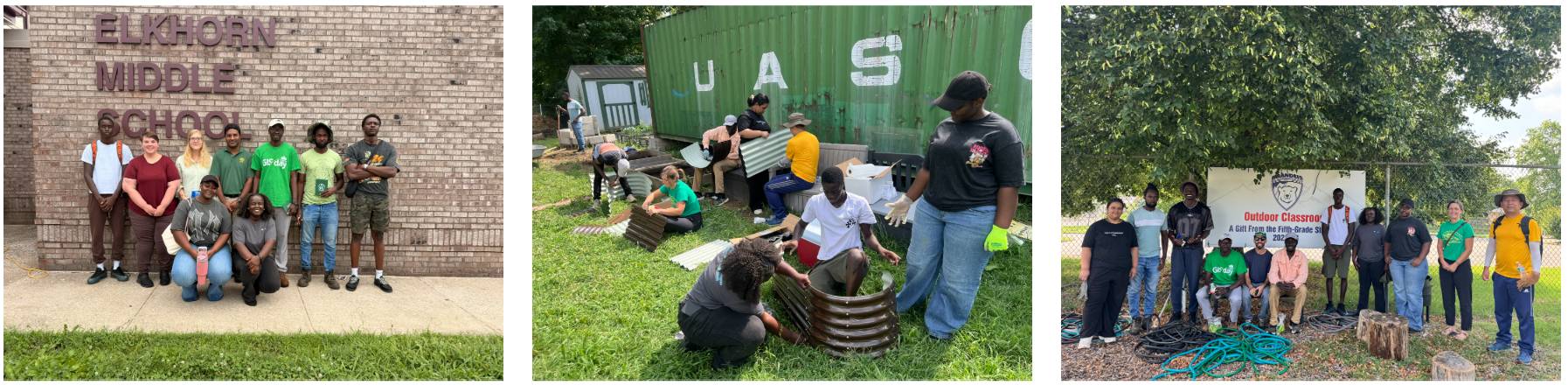
Kentucky State has supplied additional growing containers for the Winburn location, with more being prepared as the partners continue caring for and developing the two gardens.
The project reflects the University’s broader work in urban agriculture and sustainable food production. Kentucky State students and researchers study soil-based cultivation, hydroponics, controlled-environment agriculture, and other methods designed to make effective use of land, water, and available resources.
Working at the Lexington gardens also gives students experience translating research into public service. They strengthen their technical knowledge while learning how agricultural practices can be adapted to a particular site, audience, and growing environment.
The initiative was recently featured by Spectrum News 1, which visited the gardens and spoke with Tudzi, Dr. Sarr, and other participants about the work.
The project is funded through a U.S. Department of Agriculture Capacity Building Grant, Award No. 2025-38821-45463.
Legal Disclaimer:
EIN Presswire provides this news content "as is" without warranty of any kind. We do not accept any responsibility or liability for the accuracy, content, images, videos, licenses, completeness, legality, or reliability of the information contained in this article. If you have any complaints or copyright issues related to this article, kindly contact the author above.
