

Removing Barriers for Adult Learners: A Conversation with KYSSC’s Tracy Teater
July 23, 2026
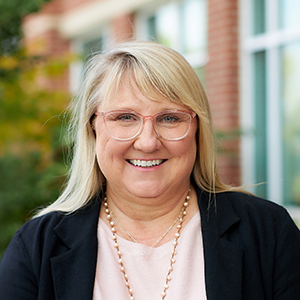
Tracy Teater serves as associate director of adult attainment with CPE’s Kentucky Student Success Collaborative. After the release of CPE’s State-Level Framework for Re-engaging Adult Learners report, we sat down with her to discuss some of the issues contributing to Kentucky’s “Some College, No Credential” population.
When we talk about adults with ‘some college, no degree,’ it’s easy to focus on the numbers. However, what do those numbers represent in terms of the people behind them - their experiences, challenges and potential?
Our adult learners bring a diverse life, work and perspective experience to our campuses. I think that makes the campus environment richer for everyone, providing a much more diverse experience for our traditional students who may have had limited exposure to adults outside their teachers and coaches.
But, our returning adults have just as many challenges that can impact success. Transportation - that’s a big one, especially for students who live in our rural communities. It’s not just the time spent getting there, either, but actually finding a way to get there and back.
Scheduling is another big one. We know that a majority of Kentucky’s adult learners are part-time, online students for this reason. They need flexibility to help with the competing priorities of adulthood – fitting school into their work schedule and caring for children or, in some cases, children and parents. And we can’t just lump it into the statement, “We need more childcare.” That’s a little bit of a myth because often it is not the need for daily childcare, but instead “drop in childcare.” Assistance for when an adult student learns their child is sick, school’s canceled or some other disruption. Many care providers don’t allow for that and access to school-age care is challenging to find.
Based on your work and the outcomes of CPE's research, what do you think people misunderstand about these adults who have attended college but didn’t complete a credential?
That they stopped out because they didn’t see the value in higher education. That’s not true – our adults often have high GPAs, and they do see a value in a postsecondary credential. Many stop out because their reality and the campus environment weren't a good fit - which is actually encouraging, because it means we have the power to change the environment.
That’s why the Collaborative emphasizes “student journey mapping,” where we help campuses look at their processes and policies through the lens of a prospective adult student to see where the gaps are because it’s little, easily remedied things that erode retention and completion.
For example, one campus initially reported they were serving adult learners well until they did that self-assessment. The journey mapping really made them all stop and think, “Oh, we’re not adult friendly at all.”
A community and technical college had a similar journey-mapping result, having to revamp their entire enrollment checklist because it was just an adaption of the one they use for traditional students.
Even simple things, like promotional materials, matter. How can a prospective adult student imagine themselves on campus when the website doesn’t have a photo of anyone over the age of 25? Journey mapping makes all these little things apparent, then we can make small intentional changes that bring big results.
This is where KYSSC’s Leadership exChange really helps. Beyond a whole module devoted to student journey mapping, it offers a comprehensive approach toward systemic improvement. I encourage anyone who wants to learn more about it, join the next cohort.
Given the new adult learner metric in Kentucky's performance funding model, how are colleges changing the way they serve adult students compared with the traditional (straight from high school) students?
Beyond what I’ve already mentioned, some are really focusing on financial aid and scholarships, debt forgiveness and basic needs supports like childcare vouchers, laptop loaners, transportation assistance, food pantries and lactation spaces to make it easier for these students to thrive on campus.
Another cost-saving strategy campuses have been instituting is awarding credit for prior learning (CPL) – course credit for work, military or life experience. When adult learners earn CPL, they reduce both the time and cost of completion, so KYSSC has been working with campuses on improving CPL policies and processes.
But CPL can backfire. Awarding a surplus of elective credits actually affects financial aid and “satisfactory academic progress” - a term we use to determine whether a student is on track, based on credit accumulation and completion timeframes. If these two factors are out of sync, students can lose financial aid. Also, CPL credits don’t always transfer consistently between institutions, which can derail a student’s progress. These are complications we still need to work through.
Lastly, to support our adult learners, CPE has been focused on facilitating partnerships between employers and higher education. Often, adult learners are over income thresholds for federal financial aid because they are married or working full-time. Our research also shows many stop-outs were pursuing credentials in high-demand fields, which means getting workforce leaders to support some of the expense of going back benefits the employee, the employer and the state alike.
Given all this complexity, how can faculty and staff get more involved and learn more about serving adults?
Faculty and staff interested in any of our initiatives connected to adult learners are welcome to join our Kentucky Adult Attainment Network, which is a community of practice that meets monthly to focus on adult learners. Our charge is broad, and we have several subgroups – like CPL, childcare solutions, journey mapping, etc. – so, it benefits anyone to join. We want to provide a space where folks can share their expertise, ask for advice, raise up critical issues, and elevate key recommendations to support adult attainment. You can reach out to me via email to become a member. We’d love to have you!
Legal Disclaimer:
EIN Presswire provides this news content "as is" without warranty of any kind. We do not accept any responsibility or liability for the accuracy, content, images, videos, licenses, completeness, legality, or reliability of the information contained in this article. If you have any complaints or copyright issues related to this article, kindly contact the author above.
