

Protecting the harvest: Blackacre growers learn to spot pests and disease
Kentucky State Extension workshop brings hands-on training to Louisville’s community growing spaces
LOUISVILLE, Ky. — A damaged leaf or an ailing plant can be an early warning of trouble for a harvest. At Blackacre Farm, farmers and community gardeners learned how to recognize those signs and decide what to do next.
Kentucky State University’s Pest and Disease Management Workshop and Field Day brought growers together Sept. 19 for practical instruction and hands-on crop scouting.
Led by Dr. Alhagie K. Cham, urban horticulture Extension and research scientist with the University’s Cooperative Extension Program, the training focused on identifying problems early, protecting crop quality, and reducing production losses.
“Effective pest and disease management starts with regular scouting and accurate identification,” Dr. Cham said. “When growers know what they are seeing in their crops, they can make informed management decisions, prevent problems from becoming more serious, and protect crop quality and productivity.”
Blackacre’s community garden offers more than 300 plots, including organic and conventional growing options. For the workshop, those growing spaces became a learning laboratory where participants could connect instruction with crop conditions in the field.
Susan Ballerstedt, Blackacre’s farm and garden manager, opened the morning with an introduction to the site, its growing operations, and the community of gardeners who use it.
From there, Dr. Cham introduced common insect pests and plant diseases affecting small-scale vegetable production, emphasizing symptoms growers should recognize and management strategies they could apply in their own gardens and farms.
Participants then moved into the growing areas to practice scouting. Examining crops for signs of pest activity and disease gave them an opportunity to apply the lesson, ask questions, and discuss problems observed at the site.
During the final instructional session, growers considered possible causes of crop damage and appropriate responses. Discussion of integrated pest management emphasized regular monitoring, accurate identification, and management practices that can reduce unnecessary pesticide use.
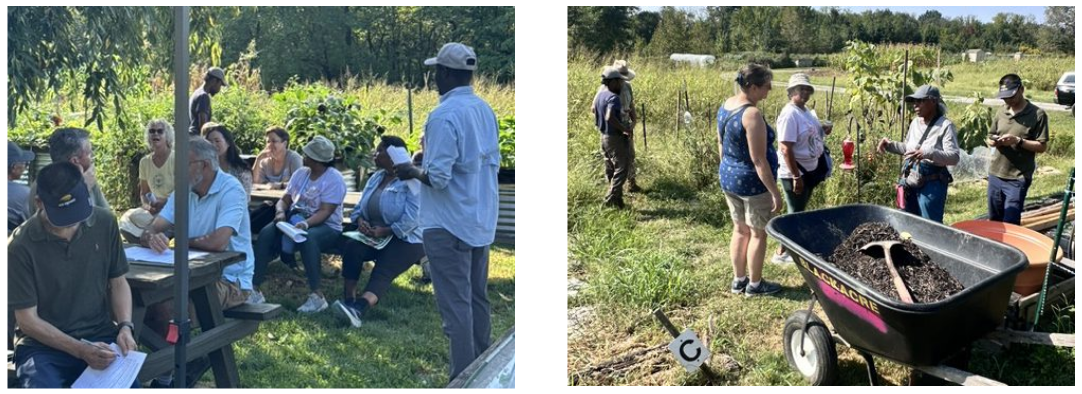
Throughout the day, participants shared challenges from their own growing experiences and compared approaches with other farmers and gardeners. That exchange brought local knowledge into the training and gave growers opportunities to learn from one another.
For small-scale producers, pest and disease pressure can affect both crop quality and yield. Recognizing a problem before it spreads helps growers make informed decisions about how to respond and reduce the risk of losing part of a harvest.
Continued collaboration with Blackacre will support additional workshops, field demonstrations, technical assistance, and educational resources shaped by community growers’ needs.
Part of the College of Agriculture, Health, and Natural Resources, Kentucky State’s Cooperative Extension Program brings research-based education to communities across the Commonwealth. Workshops such as the Blackacre field day put the University’s 1890 land-grant mission into practice by helping growers apply that knowledge where they work.
Co-project directors and project collaborators supporting the broader risk management initiative include Arnold Katende, Extension horticulturist; Alan Patterson, state specialist in disaster education; and Emily Smith, state specialist in disaster health and wellness.
Also contributing are Jessica Marquez, state specialist in Community Resource Development, and Gill Finley Jr., program leader in Community Resource Development, along with other Extension partners.
For more information about urban horticulture workshops and programs, contact Dr. Cham at alhagie.cham@kysu.edu or 502-597-6570.
Support for this work is provided by the Southern Risk Management Education Center through the U.S. Department of Agriculture’s National Institute of Food and Agriculture Extension Risk Management Education Competitive Grants Program, Federal Award No. 2025-70027-45397 and Subaward No. GR026423.
Legal Disclaimer:
EIN Presswire provides this news content "as is" without warranty of any kind. We do not accept any responsibility or liability for the accuracy, content, images, videos, licenses, completeness, legality, or reliability of the information contained in this article. If you have any complaints or copyright issues related to this article, kindly contact the author above.
