

Rain, Wings and a Remarkable Journey: Monarch Tagging Marks 50 Years of Kentucky Nature Preserves
By Brad Bowman
It seems almost impossible that the monarch butterflies now moving through Kentucky are on a 3,000-mile journey from as far north as southern Canada to a small mountainous region of central Mexico – even though these small insects have never been there before.
In September, the Kentucky Office of Nature Preserves hosted a public monarch tagging event, partnering with the U.S. Fish and Wildlife Service, Kentucky State Parks and Kentucky Department of Fish and Wildlife Resources to help understand the many mysteries surrounding these tiny travelers.
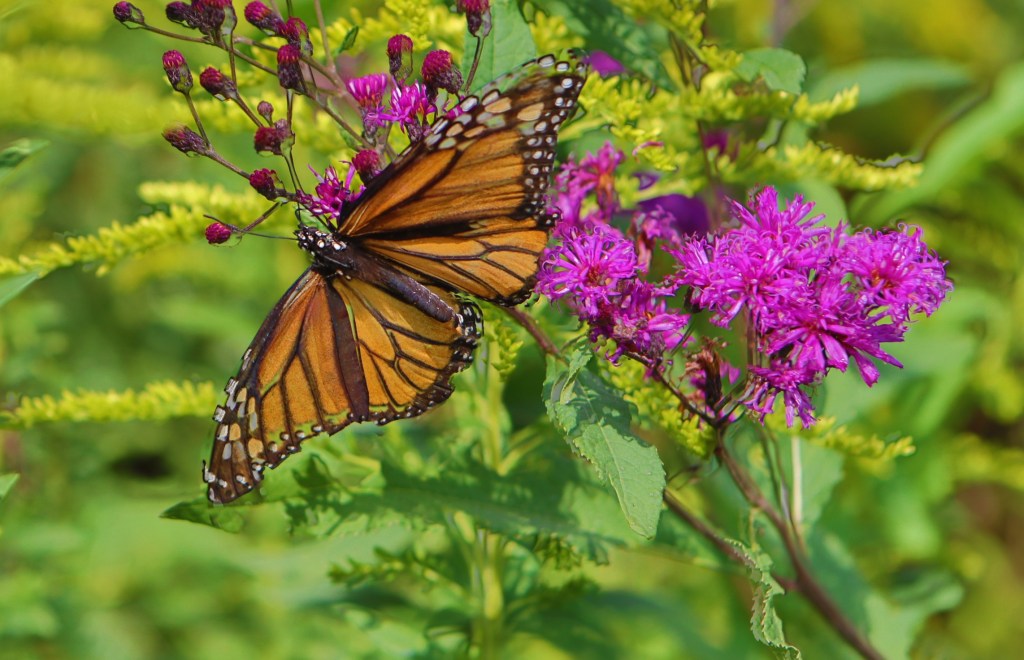
Rain fell over the former Dye family farm near Perryville Battlefield as staff and visitors waited for the clouds to break. Somewhere among the property’s vegetation, the monarchs were hiding upside down, resting from their annual migration south, waiting too for the rain to stop and the sun to come out.
The event was one of several planned this fall to celebrate the 50th anniversary of the Kentucky Energy and Environment Cabinet’s Office of Kentucky Nature Preserves (OKNP). At the Dye House farm area, which is co-managed by OKNP, visitors got a hands-on look at how habitat management and scientific research are helping protect monarch butterflies and other pollinators.
Heidi Braunreiter, prescribed fire program coordinator, led the event, which she considered a crucial opportunity to showcase the rewards of proper land management.
Despite the rainy weather that day, the team was able to tag 20 monarchs. Aa total of 28 folks were in attendance. “As land managers, monarch tagging events are invaluable for connecting with our community and showcasing how land management actions directly build a healthier ecosystem,” Braunreiter said.
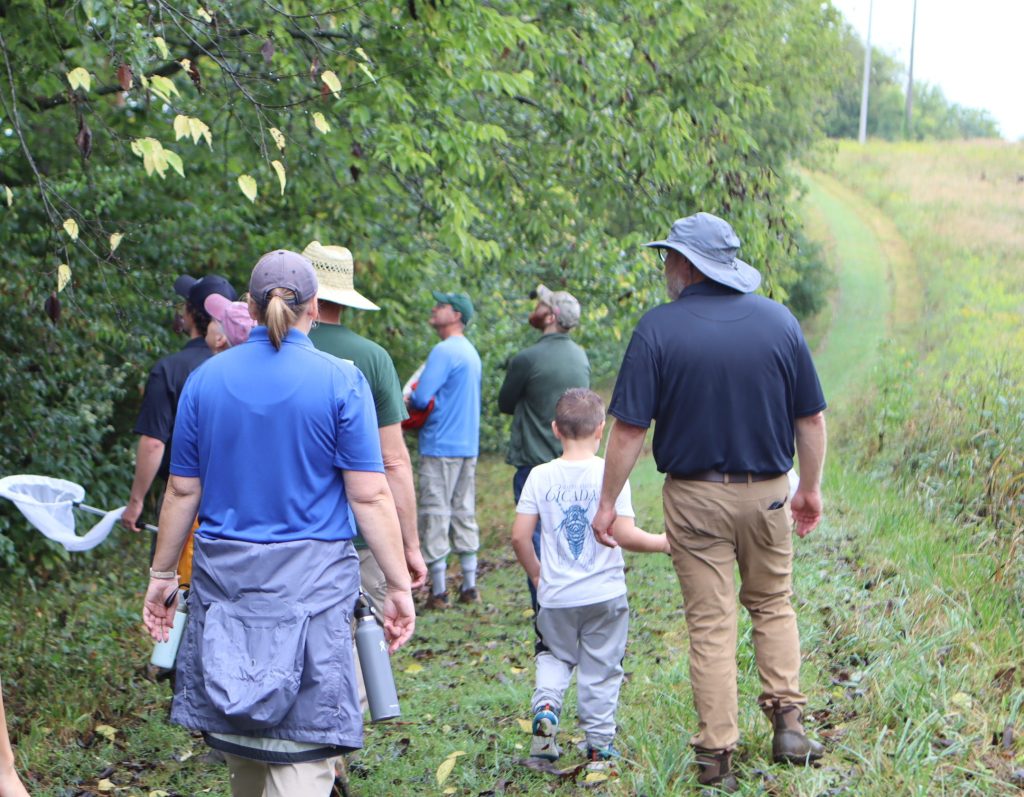
“While tools like prescribed fire and targeted herbicide applications can initially look destructive to the public, standing in a sea of native wildflowers can help change that narrative. Watching a monarch use these restored grasslands as habitat before its 1,000+ mile journey to Mexico helps people see the direct results of our work. It also shows how our local restoration efforts can have global impacts.”
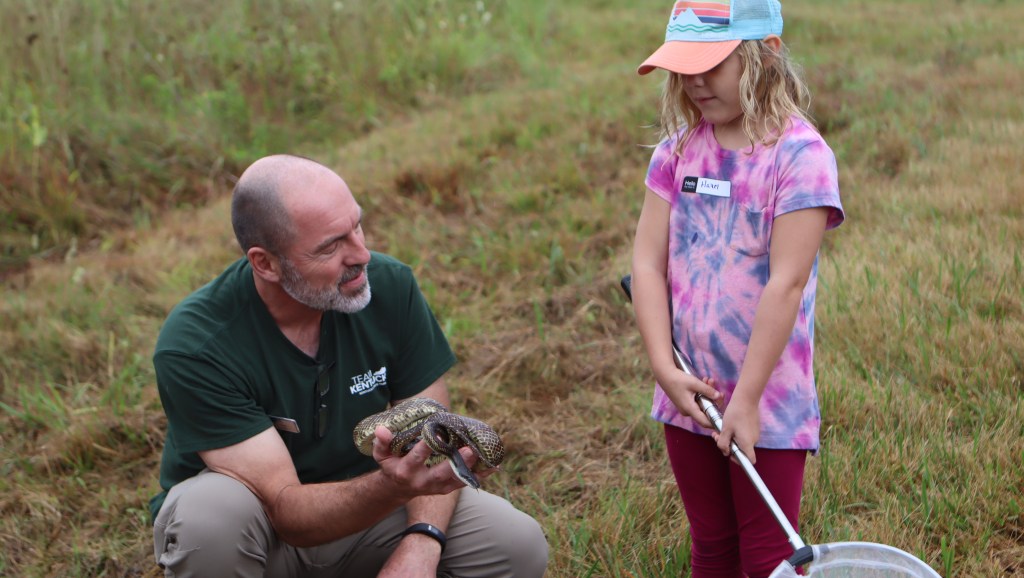
Participants walked trails where prescribed fire is used to maintain pollinator habitat, learning how to safely capture, identify, measure and tag migrating monarchs.
For Maddy Heredia with the U.S. Fish and Wildlife Service, the event was also an opportunity to explain the extraordinary journey taking place through Kentucky each fall.
The monarchs heading south belong to what researchers sometimes call the “super generation.” Unlike earlier generations that move northward, reproduce and live for only a matter of weeks as , this generation can survive for months and undertake the long migration to Mexico.
“We still don’t know how these monarchs know that they have to live for nine months,” Heredia said. “The monarchs have environmental cues that halt sexual development, conserving energy, allowing them to live longer. It’s a complex interaction of environmental and internal cues that aren’t fully understood yet.”
Scientists have been trying to better understand that journey for decades. Monarch tagging efforts began in the early 1990s to help researchers determine where the butterflies travel, how many are migrating and what routes they use. That information can help conservationists determine where habitat is most needed.
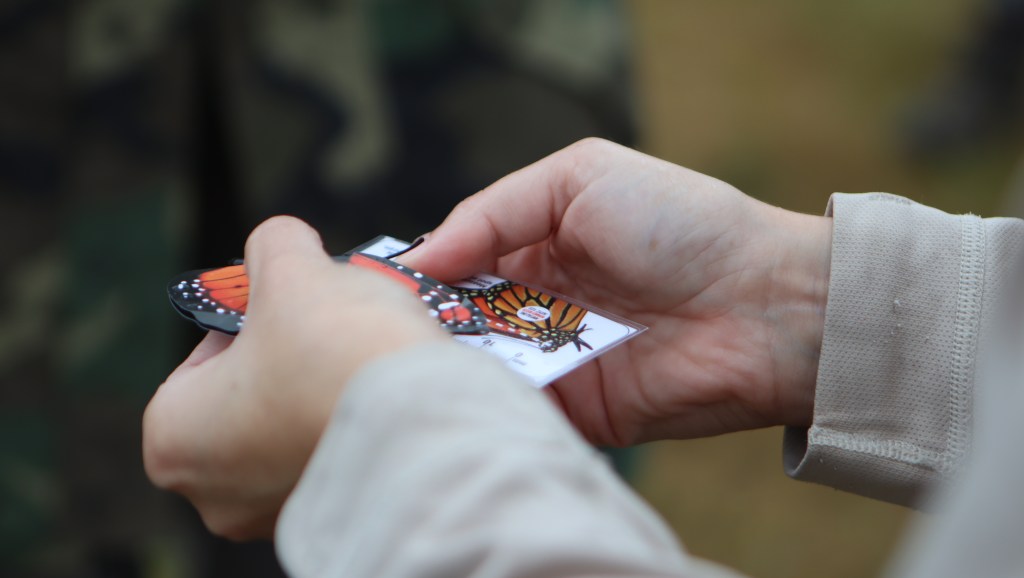
During tagging, a small sticker carrying a unique identification number is carefully placed on a monarch’s wing before the butterfly is released. Researchers or other community scientists can later recover tagged monarchs along the journey or in Mexico and trace them back to where they were originally captured.
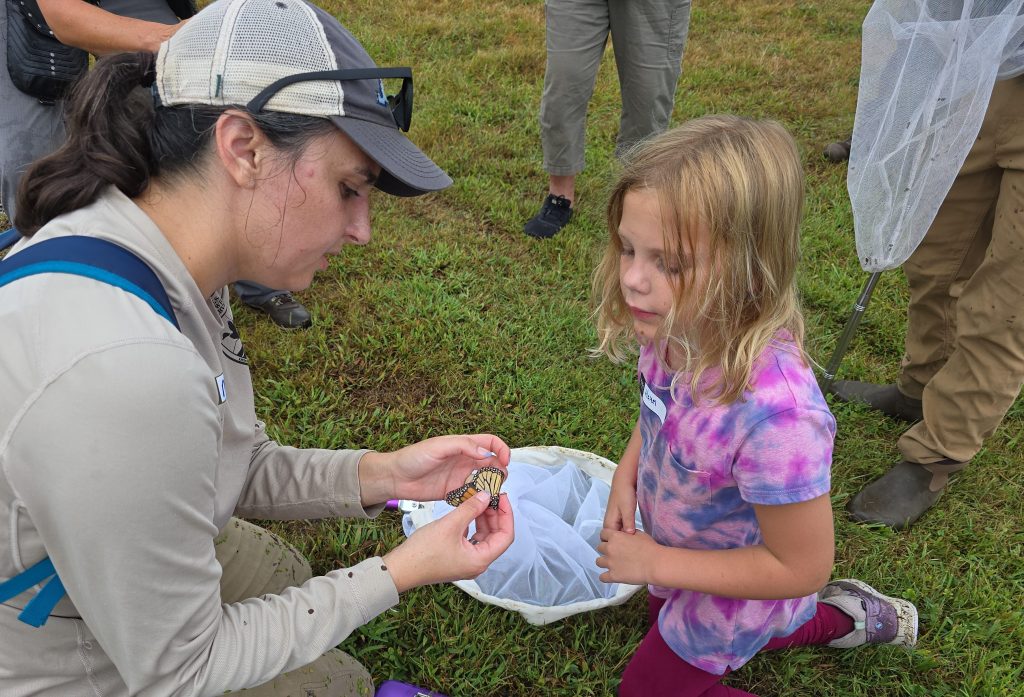
Finding one tagged butterfly among millions can be like searching for a needle in a haystack, Heredia said, but every recovery provides another piece of information about monarch migration.
“It’s just a better understanding of how they’re migrating, what corridors they’re using, where we can focus our habitat efforts,” she said.
Even handling a monarch requires care. The butterflies’ wings are covered with delicate scales that give them their color, and excessive handling can remove those scales. Researchers have also studied where tags should be placed to minimize their effect on flight.
Traditional tagging is now being joined by new technology. Heredia told participants about experimental miniature solar-powered tracking devices small and light enough to be attached to monarchs. About 400 were deployed last fall on butterflies in Canada and parts of the United States, offering researchers another way to follow their migration south.
The monarch tagging event is part of a series of activities commemorating OKNP’s five decades of protecting Kentucky’s natural heritage. Other anniversary events this fall include volunteer opportunities, hikes and educational programs highlighting Kentucky’s habitats, plants and wildlife.
And after a morning spent watching the rain, the arrival of a few monarchs offered a fitting reminder of what those 50 years of work are ultimately about: protecting the places these remarkable tiny travelers depend on, one Kentucky landscape at a time.
Some quick interesting facts:
- Monarchs can fly up to 13,000 feet
- They roost in trees at night and during bad weather just like birds
- Scientists don’t know how, but monarchs use their antennae as part of their navigation system
- It’s believed monarchs can use the earth’s magnetic field to maintain a southerly direction when sunlight cues are not available.
- Monarchs can roughly cover up to 75 miles per day
- The longest recorded single-day flight, according to the U.S. Fish and Wildlife Service, is 265 miles
- Kentucky is part of a large migration corridor
- Milkweed is the primary host plant, making it a critical resource for their life cycle. It also gives monarchs a chemical defense against predators. Caterpillars eat milkweed and the chemicals make monarchs bitter, toxic to predators
Legal Disclaimer:
EIN Presswire provides this news content "as is" without warranty of any kind. We do not accept any responsibility or liability for the accuracy, content, images, videos, licenses, completeness, legality, or reliability of the information contained in this article. If you have any complaints or copyright issues related to this article, kindly contact the author above.
